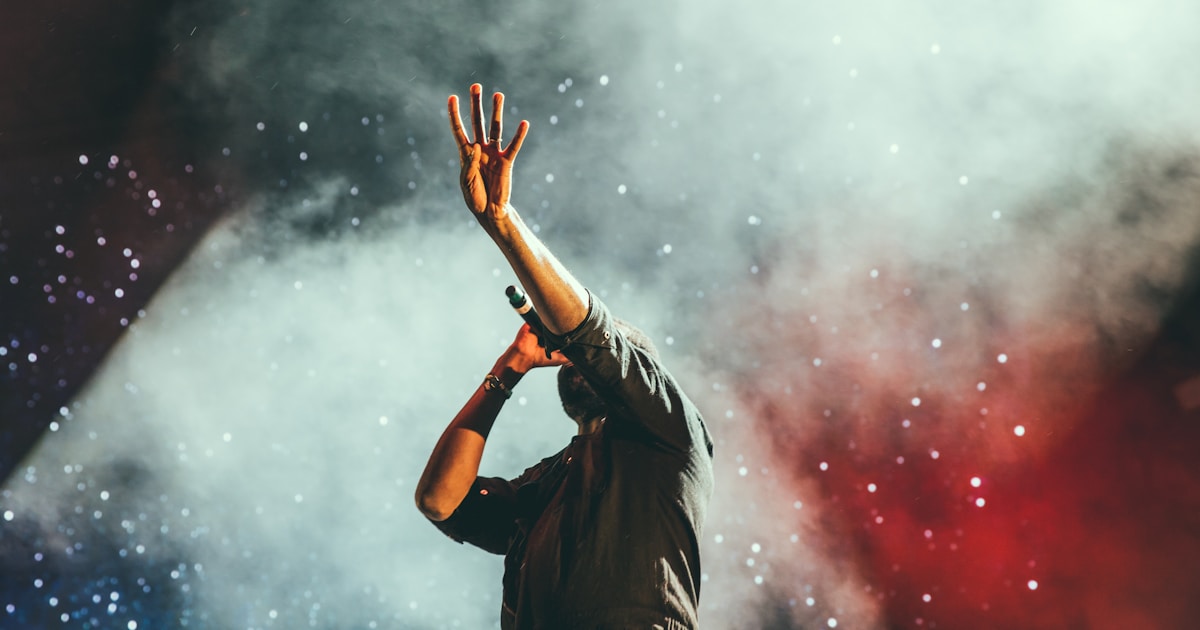
Music & Singing Dreams: What It Means to Dream About Music
TL;DR - Key Takeaways
- Access modern tools like Hypnos to decode your subconscious
Ready to stop guessing what your dreams mean?
Turn last night's dream into insight in under a minute · Free
5.0 on the App Store, from 4 ratings
“The dream analyses are inspiring and often surprisingly accurate — the journaling doesn't feel like documentation, it feels like real self-knowledge.”
Music & Singing Dreams: What It Means to Dream About Music
By Ron van Cann · May 2026 · 7 min read
Most dream research focuses on the visual dimension — the scenes, the landscapes, the people and animals we encounter in the dream world. But dreams are not only visual. Music heard in a dream, singing that arises from within the dream, or the profound silence that preceded music's appearance — these auditory dimensions of dreaming can be among the most emotionally powerful dream experiences available.
Music operates differently from the visual world. Images can be analyzed, symbolically interpreted, related to waking events. Music bypasses this analytical process: it communicates directly to the emotional life, to the body, to something beneath the ordinary interpretive mind.
When music appears in dreams, something of this direct, non-linguistic communication is present.
What Music Represents in Dreams
What Language Cannot Say
The primary significance of music in dreams: it represents what can only be communicated through sound rather than words. Music is the medium of the emotional and spiritual dimensions that ordinary language approaches but cannot fully reach.
In dreams, music often appears when:
- The emotional content of the dream is too complex, too layered, or too profound for the dream to represent through images alone
- Something in the dreamer's life calls for expression that transcends ordinary articulation
- The unconscious is communicating something that the waking mind, with its preference for words and analysis, has been unable to receive through those channels
The music in the dream is often doing something that the visual imagery cannot do alone: adding the emotional register, the tone, the quality that makes the content fully present.
The Emotional Register — The Most Important Signal
The specific quality of the music is almost always the most important thing to attend to in a music dream: not what is playing but how it feels. Is it:
Joyful: Something is genuinely celebratory or liberating — the music of arrival, of breakthrough, of genuine happiness.
Sorrowful: Something is mourned, grieved, felt in its loss — the music of what is gone or passing.
Beautiful beyond ordinary experience: The hauntingly beautiful music that makes you cry or fills you with awe — something of genuine transcendence is present.
Discordant or wrong: Something is not in harmony — conflict, dissonance, something that is not resolving properly.
A melody you cannot quite place: The half-familiar music that seems to be something you should recognize but can't — the feeling of almost-memory, of something just out of reach.
The Expression of the Inner Life
Music is the outer expression of what is inner: when you sing or play, you are giving form to what is inside — emotion, spirit, the quality of experience. In dreams, music represents this expression capacity.
Dreams of making music — singing, playing an instrument — represent the active expression of the inner life through the medium that most fully allows it. The voice lifted in song, the instrument played with skill and feeling, the music that emerges from your own interior and fills the space — these represent the self at the point of full, resonant expression.
Singing in Dreams
Singing is the voice at its fullest — when speaking becomes inadequate and the voice must go further, into tone and sustained note and harmony. To sing in a dream is to express with the full voice what ordinary speech cannot carry.
Singing beautifully: Full, resonant, freely expressed. The dream of genuine authentic expression — something is being communicated that can only be communicated this way, and it is going out fully and beautifully. This is among the most expansive self-expression dreams available.
Unable to sing: The voice won't work, the notes won't come, the sound that should be full comes out thin or silent. The suppressed-expression dimension: something that should be expressible through full-voiced sound is being blocked or cannot emerge.
Singing with others: Harmony — the experience of multiple voices finding their way together, of individual sounds becoming something greater through combination. This represents genuine community, the experience of being in harmony with others, of being part of something larger that is beautiful together.
A voice singing from somewhere you cannot see: Something is expressing itself from a place you cannot locate — the music comes from beyond the ordinary visible space of the dream. The music as something reaching you from beyond the ordinary perimeter of the self.
Specific Instruments
Different instruments carry their own symbolic weight in dreams:
The piano: A range spanning almost the full range of human hearing, capable of great complexity and great simplicity. The piano represents: comprehensive expression, the capacity to play many notes simultaneously, the solo instrument that can fill a space entirely.
Strings (violin, cello, guitar): The resonance of vibrating string is among the oldest instruments — the voice of the string carries specific qualities of warmth, vulnerability, and sustained tone. String instruments often represent the emotional, the vulnerable, the sustained feeling.
Brass (trumpet, horn): The herald, the announcement, the call from a distance. Brass instruments carry sound across great distances and have historically announced arrivals, called to battle, or signaled sacred moments.
Drums and percussion: The body's rhythm, the heartbeat externalized, the driving pulse of music. Drums represent: the primal, the rhythmic, the grounding beat that organizes movement.
The human voice: The most intimate instrument — making music from within the body itself. A voice heard singing in a dream is the most personal of all musical experiences.
Common Music Dream Scenarios
Hearing Music No One Else Seems to Hear
You hear music — beautiful, specific, clear — but the people around you in the dream are unaware of it. The music is yours: something is audible to your inner life that is not available to others.
This dream often represents the interior music — the emotional quality, the tone, the inner state — that is present in the dreamer's experience but not visible to others.
A Song You Wake With in Your Mind
The dream music that follows you into waking — a melody that remains clear, a song that will not leave. The music that crosses the threshold from dream to waking carries particular significance: whatever it is, it has broken through.
The specific song or melody is often worth attending to: what are its words? What does it evoke? What is the emotional quality it carries into the waking state?
A Concert or Performance
You are watching or listening to a performance — a concert, an orchestra, a choir. The collective performance of music represents: encountering the organized, intentional expression of many voices or instruments working together toward a shared musical goal.
Silence After Music
The dream is full of music — and then the music stops, and there is silence. The silence after music is not the same as ordinary silence: it carries the memory of what was playing, the space defined by what has concluded.
Music Across Traditions
Orpheus: The Greek myth of the musician whose music was so beautiful that it charmed even the underworld — the stones and trees followed him, and Hades agreed to release Eurydice. Music as the power that transcends ordinary limitations, that can reach into the underworld of the unconscious.
The Music of the Spheres: The ancient and medieval concept that the planets' movements create a cosmic music — the harmony of the universe itself expressed as sound that, if you could hear it, would be the most beautiful music imaginable. The universe itself as musical, organized by the same mathematical principles that govern harmony.
Sacred music across traditions: Virtually every spiritual tradition uses music as a central medium of the sacred: Gregorian chant, Hindu bhajans, Islamic call to prayer, indigenous drumming, gospel, blues — music as the medium through which the human accesses the divine.
Therapy and healing: Music therapy is a recognized clinical discipline — the use of music to facilitate healing, processing, and emotional expression in clinical contexts. The therapeutic power of music reflects the same quality that makes music powerful in dreams: it reaches where other forms of expression do not.
Frequently Asked Questions
What does it mean to dream about music?
Music in dreams represents the emotional and spiritual dimensions of experience that transcend ordinary language — what can only be communicated through sound, rhythm, and harmony rather than words. Music operates at a level that bypasses the ordinary analytical mind: it speaks directly to the emotional life, to the body, to the spiritual dimension of experience. In dreams, hearing music often represents the dreamer's access to this direct, non-linguistic communication: something is being expressed that words would fail to capture. The quality of the music — its emotional register, whether it is joyful or sorrowful, harmonious or discordant — is the primary message of the dream.
What does it mean to sing in a dream?
Singing in a dream represents the expression of what cannot be said in ordinary speech — the emotional and spiritual content that requires the full voice, the embodied resonance, the sustained note that speaking cannot sustain. Singing is the voice at its fullest extension: when the voice goes beyond speech into song, it accesses registers of expression that ordinary conversation does not reach. In dreams, singing represents this kind of full-voiced expression: the saying of what needs to be said with your whole self, in the mode that makes it most fully expressible. Dreams of singing beautifully often represent a genuine arrival at authentic self-expression; dreams of being unable to sing represent the difficulty or suppression of this full expression.
What does it mean to dream about music that makes you cry?
Music that produces tears in a dream — that is so beautiful or so sorrowful that it provokes crying — represents the encounter with something of genuine emotional depth that the ordinary self has difficulty accessing. Music can reach emotional material that is normally protected by the analytical mind's defenses: the beauty of the music bypasses ordinary resistance and touches directly what is there beneath the surface. Music that produces tears in a dream often represents the presence of genuine emotion — grief, love, longing, beauty, or awe — that has not fully found expression in waking life. The tears are the response to the genuine encounter with what the music represents.
Related reading:
Found this helpful?
Save this guide to your Dream Board.


