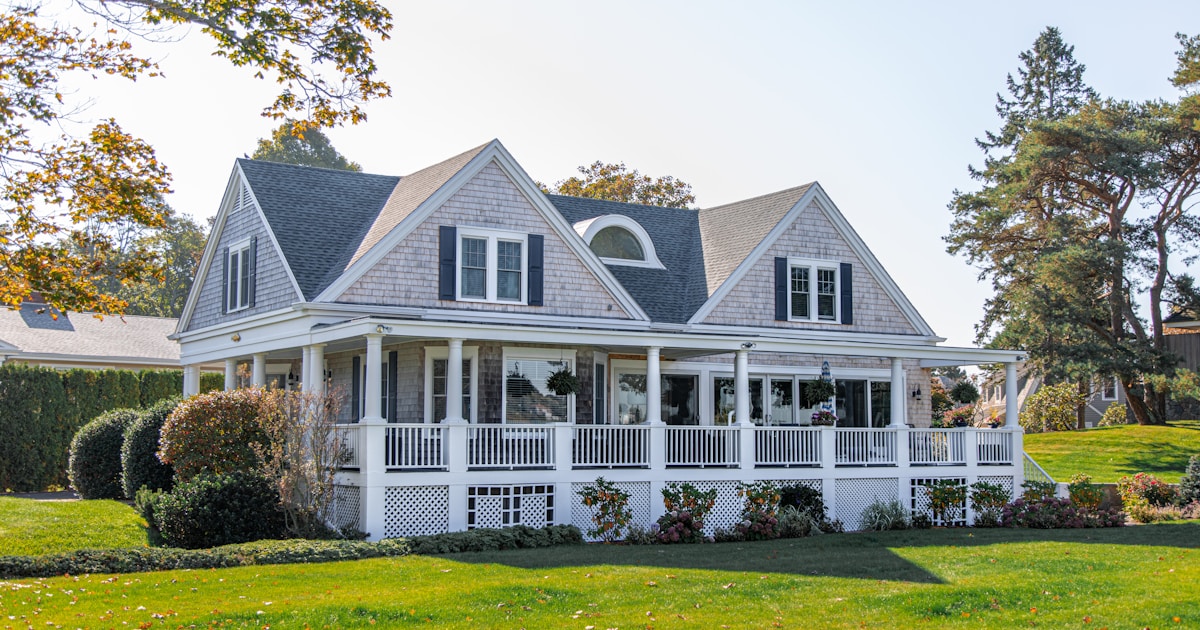
House Dreams: What It Means to Dream About a House or Home

TL;DR - Key Takeaways
- Discover Carl Jung's concept of the collective unconscious
- Access modern tools like Hypnos to decode your subconscious
Ready to stop guessing what your dreams mean?
Turn last night's dream into insight in under a minute · Free
5.0 on the App Store, from 4 ratings
“The dream analyses are inspiring and often surprisingly accurate — the journaling doesn't feel like documentation, it feels like real self-knowledge.”
House Dreams: What It Means to Dream About a House or Home
By Ron van Cann · May 2026 · 9 min read
In the landscape of dream symbolism, few images are as consistently meaningful as the house.
Carl Jung, who spent decades mapping the symbolic territory of the unconscious, used the house as his primary metaphor for the psyche itself: the unconscious is a house, and the dream is an exploration of its rooms. This metaphor resonates because it is accurate — the house in dreams does represent the self, and its rooms do correspond to different aspects of inner life.
But understanding house dreams requires more than a single symbolic equation. The specific house, its condition, who is in it, what is happening within its walls, which rooms are accessible and which are locked — all of these carry specific meaning that goes beyond the general "house = self" formula.
The House as the Self — The Core Symbolism
The house dream's primary symbolic register: the house is a representation of the self in its totality. Different parts of the house correspond to different aspects of the self:
The foundation: The most fundamental, least visible structure. What everything else is built on. Foundation dreams — foundation problems, foundation repairs — represent the most basic aspects of self: core beliefs, early experiences, fundamental values and assumptions about life.
The basement: Below the ordinary living space, often dark, storing what is not currently used. In dream psychology, the basement consistently represents the unconscious — what is below the surface, not readily accessible, stored rather than lived in. What is in the basement of the house in your dream?
The ground floor: The ordinary living space — kitchen, living room, the rooms where daily life occurs. This represents the everyday self: the self that functions in the world, that is seen by others, that manages the ordinary business of life.
Upper floors: Above the ordinary living space, often bedrooms and private spaces. The upper floors often represent the inner life, the private self, the aspects that are less public — and in some dreams, the aspirational or spiritual dimensions.
The attic: Highest point, often dusty, storing the old and forgotten. The attic represents the very top of consciousness — high thoughts, old memories, what has been stored in the mind but not recently accessed. Unlike the basement (unconscious), the attic is conscious but not current.
The roof: The top of the structure, what protects from external forces. A leaking or damaged roof represents a failure of protection from what is above — the external, the environment, something coming from outside.
The walls: What defines the structure, separates inside from outside, creates the rooms. Dream wall conditions (sturdy vs. crumbling, thick vs. thin) often represent the boundaries between self and world, or between different aspects of the self.
Windows: The interface between inside and outside — what you see from within, what can be seen from without. Window dreams (looking out, trying to see in, broken windows, windows that won't open) often represent the interface between inner life and external reality.
Doors: Thresholds and choices — what can be entered, exited, or passed through. Locked doors in dreams are particularly significant: they represent aspects of the self or areas of life that are not currently accessible.
What House Dreams Commonly Represent
The Current State of the Inner Life
The most direct reading of a house dream: the house reflects how your inner life is currently doing.
A well-maintained, clean, spacious house with adequate light and functional systems: the inner life is in good order. Things are working, there is enough space, what needs to function is functioning.
A dilapidated, dark, neglected house: something in the inner life has been left without attention. A relationship, a creative practice, emotional health, values — something is in disrepair.
A house under renovation or construction: active work on the self is underway. Change is happening, it is disruptive and not yet complete, but something is being improved or expanded.
The Childhood Home — Return to Origins
The childhood home is the most emotionally resonant house dream. It represents the original psychological architecture — the structure that was laid down in those earliest years and in which fundamental patterns were established.
Dreams of the childhood home appear when:
- Something from that period is active in current life — an old pattern recurring, an early belief being challenged or confirmed
- A relationship from childhood is influencing the present
- There is emotional work to do with the past — healing, integration, revisiting what was left unresolved
- A major transition is bringing up the early foundations: what the self was built on is being reviewed
The emotional quality of the childhood home dream is significant: is the home warm and welcoming, or cold and threatening? Is the child-self present, or is the adult revisiting an empty space?
An Unknown or Unfamiliar House
You're in a house you don't recognize — exploring its rooms, finding it larger than expected, or feeling both intrigued and unsettled by the unfamiliar territory.
An unfamiliar house most commonly represents undiscovered aspects of the self — parts of the psyche that have not yet been consciously encountered or claimed. The rooms you find often correspond to specific capacities or dimensions: a room full of books (intellectual life, knowledge), a room with many windows (perspective, perception), a room that is unexpectedly beautiful (aesthetic or creative dimension), a room that feels dangerous or dark (shadow territory).
The House That Is Falling Apart
The structure is failing: walls cracking, roof leaking, foundation sinking, rooms becoming uninhabitable. This is the dream of the inner life under significant stress or neglect.
What specific part of the house is failing often indicates what specific dimension of self is under pressure. A failing foundation = the most basic aspects of self and belief. A leaking roof = inadequate protection from external demands. A flooded basement = the unconscious overwhelming the ordinary structure.
Finding New Rooms (The Discovery Dream)
This variant is addressed in more detail in Hidden Rooms in Dreams, but briefly: discovering rooms you didn't know existed is consistently one of the most positive and expansive house dreams. It represents the discovery of previously unrecognized aspects of the self — more capacity, more beauty, more territory than was previously known.
Common House Dream Scenarios
Being in the House as a Child
You're in the house, but you are your childhood self — or you're the adult watching your childhood self. The dream is taking you back not just to the place but to the self that was formed there.
This dream often appears during periods of significant regression or healing: something about the child-self requires attention. What was the experience in that house? What was the family dynamic? What was formed (or deformed) there?
A Threatening Presence in the House
Something in the house — an intruder, a presence, a sound from another room, a shadow — is threatening. The house-as-self is under threat from something within it.
The presence is almost always a dream representation of something in the inner life: an unacknowledged emotion, a shadow aspect, a pattern of behavior, a belief — something that is present in the psyche and has not been integrated, which the dream represents as an unwanted presence in the house.
The House Flooding or Burning
The house filling with water (flooding from below = the unconscious overwhelming the structure; flooding from rain = external overwhelm entering the inner life) or catching fire (transformation, destruction, purification).
Flooding houses represent emotional overwhelm — the unconscious material or emotional content exceeding the structure's capacity to contain it. Fire in the house represents the more radical transformation: something is being consumed and destroyed, which may be an ending or may be a purification.
Renovating or Rebuilding
You're repairing, remodeling, or building something in the house. Active work on the self's structure. This is typically a positive dream — work is happening, things are being improved — but it is also disruptive and incomplete. The renovation dream appears during periods of genuine psychological work: therapy, major life change, deliberate personal development.
A House That Is Impossible to Leave
You're trying to leave the house and cannot — doors don't work, the exit keeps moving, you keep ending up back inside. This represents a psychological situation that feels inescapable: a pattern, a relationship, a way of thinking, or a life circumstance that you cannot exit despite trying.
Many People in the House
The house is full of others — some known, some strangers. The house-as-self is crowded. Each person in the house often represents an aspect of the self, a relationship, or an influence from the outside world that is occupying internal space. Too many people in the house can represent feeling invaded, overwhelmed by others' demands, or lacking private psychological space.
The House Across Traditions
Universal symbolism: The house as the self is not unique to Western psychology — it appears across virtually every tradition that has analyzed dream content. The dwelling-as-self equation is among the most cross-culturally stable of all dream symbols.
Jungian psychology: Jung used the house dream explicitly as the model for psychological structure. In his autobiography Memories, Dreams, Reflections, he describes a specific dream of a multi-story house that became his model for the layers of the psyche: the upper stories as the conscious mind, the lower floors as earlier layers of consciousness, the basement as the collective unconscious. The interpretation of houses as psychological topography originates in Jungian analysis but has been confirmed by virtually every subsequent school of dream analysis.
Indigenous traditions: Many indigenous traditions use the structure of the dwelling — the longhouse, the tipi, the hogan — as a sacred symbol of the cosmos and the person. The dwelling is the world in miniature: the fireplace as the center, the smoke-hole as the connection to the heavens, the four walls as the four directions. The house-as-self is simultaneously the house-as-cosmos.
Architectural symbolism: Throughout human history, significant buildings (temples, palaces, cathedrals) have been understood as representations of the cosmos and the divine order — the macrocosm made visible in architecture. The dwelling is the personal microcosm of this.
Related reading:
Found this helpful?
Save this guide to your Dream Board.


